Your labs are “normal” but you still feel awful.
Real thyroid care starts with a full workup, not a single TSH. Comprehensive labs, natural desiccated thyroid options, and treatment for the autoimmune root cause behind Hashimoto's.
Book a free health analysis
“A TSH inside the reference range is not the same as a thyroid that is working for you.”
Hypothyroidism vs. Hashimoto's
Hypothyroidism means your thyroid is not producing enough hormone for your body to function optimally. Hashimoto's thyroiditis is the most common cause of hypothyroidism in the United States and is autoimmune: your immune system is attacking your thyroid, slowly reducing its ability to make hormone. Standard care usually treats the resulting hormone deficiency with medication but rarely addresses the autoimmune process driving it. At NEOS, both the hormone deficiency and the underlying autoimmunity are treated.
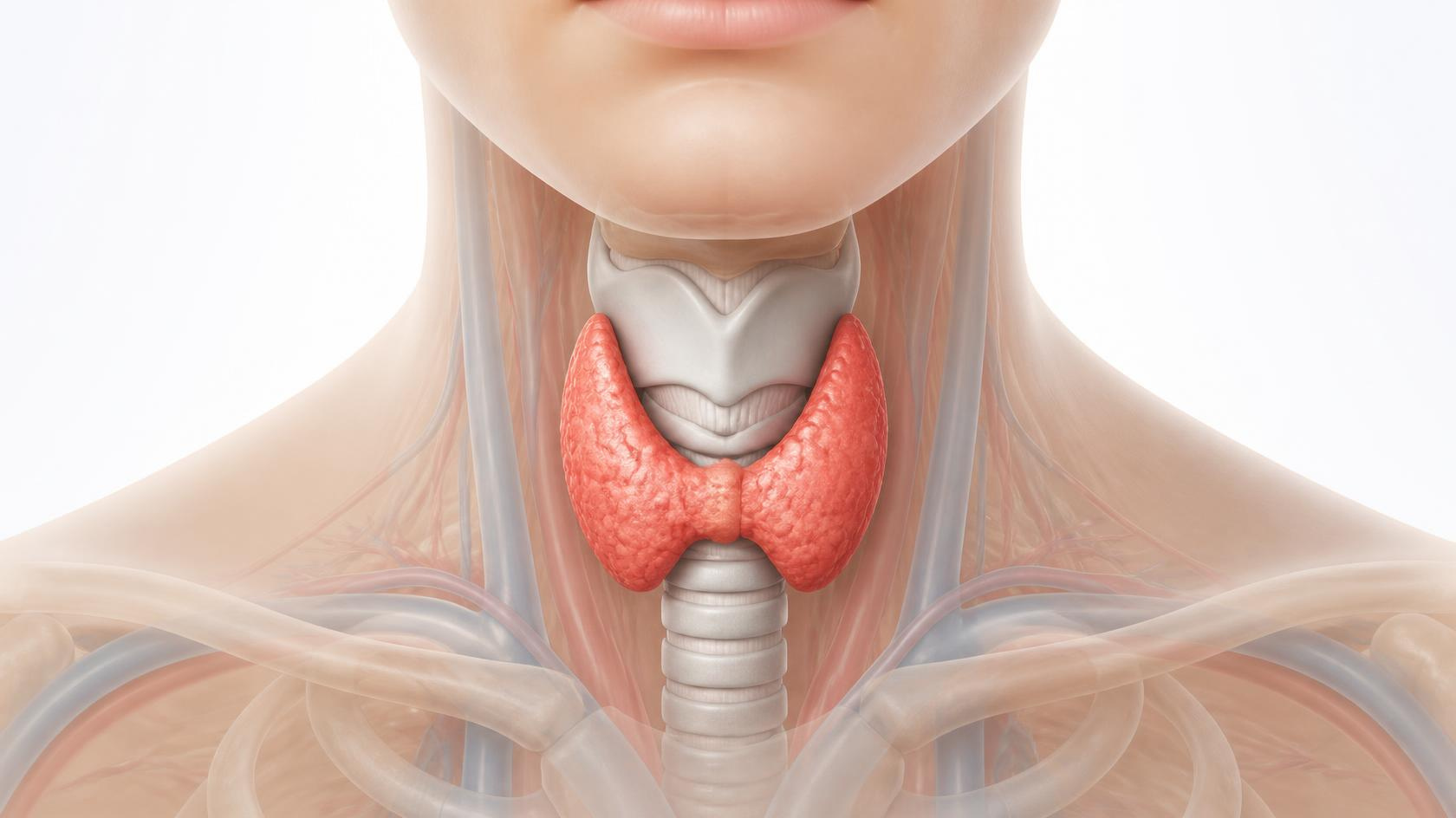
The thyroid is a small, butterfly-shaped gland at the base of your neck, but it drives nearly every system in your body.
The symptoms you have been told are stress, aging, or in your head
Thyroid symptoms build slowly and get attributed to everything except the thyroid, especially when standard TSH-only workups come back “normal.”
Persistent fatigue
Weight gain, difficulty losing
Cold intolerance
Hair loss & thinning
Dry skin & brittle nails
Brain fog, poor focus
Depression, low mood
Heavy or irregular periods

Tired of being told your labs are normal? Let's actually look.
Book a free health analysisWhy is your thyroid off?
For Hashimoto's, the thyroid dysfunction is downstream of something else. Standard care treats the symptom (low thyroid hormones) but rarely asks what is triggering the autoimmune attack in the first place. Identifying and addressing the root cause can lower antibody levels, slow disease progression, and reduce the medication burden required to feel well.
Gut dysfunction
Leaky gut and dysbiosis are consistently implicated in autoimmune conditions including Hashimoto's. Gut testing and restoration are often the highest leverage intervention in an autoimmune workup.
Gluten & food triggers
Gluten sensitivity has strong overlap with Hashimoto's through a mechanism called molecular mimicry, where the immune system confuses gluten proteins for thyroid tissue. Other food triggers can play a role too.
Nutrient deficiencies
Selenium, zinc, iron, iodine, and vitamin D are all required for healthy thyroid function. Common deficiencies get missed by standard workups and can hold you back from feeling well on medication alone.
Chronic stress & HPA axis
Sustained cortisol elevation disrupts thyroid hormone conversion (T4 to T3) and can trigger or worsen autoimmune activity. Addressing stress physiology is not optional in thyroid care.
Environmental toxins
Heavy metals, endocrine disrupting chemicals, and mold exposure can all contribute to thyroid dysfunction and autoimmunity. When suspected, targeted evaluation is available.
Viral triggers
Certain viral infections, particularly Epstein-Barr virus (EBV), have documented links to triggering autoimmune thyroid disease and can drive antibody activity over time.

Thyroid care that finally addresses everything
Most thyroid patients come to NEOS after years of being told their labs are “normal” while feeling anything but. Here is what a real workup looks like.
Deep dive intake
A 60 minute initial consult that actually looks at the whole picture, not a rushed 12 minute visit.
- Full symptom history and medical background
- Family history of thyroid or autoimmune disease
- Lifestyle, stress, gut, and dietary context
Comprehensive thyroid workup
The full panel, not just a TSH.
- TSH, free T4, free T3, reverse T3, thyroid antibodies (TPO and TgAb)
- Micronutrient testing (selenium, zinc, iron, vitamin D, ferritin)
- Metabolic, adrenal, and hormone context labs
- Add-on stool or DUTCH testing when clinically indicated for root cause
Personalized protocol
The right thyroid medication, at the right dose, in the right formulation for you.
- Levothyroxine (T4), liothyronine (T3), NDT (Armour, NP Thyroid, WP Thyroid), or compounded, based on your labs and response
- Nutrient repletion (selenium, iron, vitamin D) when deficient
- Autoimmune protocol for Hashimoto's: gut healing, food triggers, stress support
- Lifestyle guidance built into the plan
Ongoing care & monitoring
Thyroid dosing is not set-and-forget, especially with autoimmune disease.
- Regular lab re-checks including antibody trends for Hashimoto's
- Dose adjustments as your body and antibodies respond
- Direct message access to PA Pappas between visits
- Ongoing support for gut, stress, and lifestyle interventions
Education throughout
You will leave every visit understanding what your labs mean and why we chose your protocol.
- Understand what your antibodies are doing and why it matters
- Know what each medication is for and how it fits your physiology
- Make informed decisions about your own care
Every thyroid medication option, not just one
The right thyroid medication depends on your labs, your symptoms, your response to prior treatment, and your preference. NEOS prescribes the full range.
The standard first line medication for hypothyroidism (Synthroid, generic levothyroxine). Effective for many patients when properly dosed based on the full thyroid panel, not just TSH.
Added when T4 alone does not resolve symptoms, or when your body is not efficiently converting T4 to T3. Often the missing piece for patients told they are “fine” on levothyroxine alone.
Porcine-derived medication containing both T4 and T3 in physiologic ratios. Preferred by many patients who do not fully improve on synthetic T4 alone. NEOS prescribes NDT when it is the right fit.
For Hashimoto's, medication is only part of the plan. Gut restoration, food trigger evaluation, nutrient repletion, and stress support are integrated to address the autoimmunity itself.

Ready for a real thyroid workup? Start here.
Book your free consultUntreated thyroid dysfunction touches everything
Thyroid hormone regulates almost every cell in your body. Undertreated or poorly treated thyroid disease has ripple effects far beyond fatigue.
Untreated hypothyroidism raises cholesterol, blood pressure, and long term cardiovascular risk. Adequate thyroid replacement is cardioprotective.
Thyroid hormone directly affects mood, memory, and cognitive function. Depression and brain fog often resolve when thyroid is properly optimized.
Thyroid drives your metabolic rate. Weight resistance, cold intolerance, and stalled energy often trace back to inadequately treated thyroid function.
Thyroid dysfunction disrupts menstrual cycles, ovulation, and fertility, and drives postpartum thyroiditis. Optimized thyroid is foundational to hormone health.

Add-on testing when you need more answers
For Hashimoto's or complex cases, deeper testing can pinpoint the drivers of autoimmunity or explain why standard treatment has stalled.
Evaluates gut health, dysbiosis, pathogens, and markers of intestinal permeability. Often the single most useful test for identifying autoimmune root cause in Hashimoto's.
Shows sex hormone metabolism and cortisol rhythm. Helpful when adrenal stress or hormone imbalance is driving thyroid dysfunction or blocking response to treatment.
Identifies food triggers driving inflammation and autoimmunity when gluten alone is not the full picture. Adds targeted precision to the dietary side of the protocol.
Your thyroid deserves a full evaluation. Book to get started.
Book your health analysisThyroid care that follows the science, not just the TSH
Standard thyroid treatment often relies on a single lab value (TSH) inside a broad reference range that does not reflect optimal function for many patients. Modern evidence supports a fuller approach: complete labs, including free T3 and antibodies; multiple medication options, including NDT; and treatment of the autoimmune drivers behind Hashimoto's.
Every protocol at NEOS is built on evidence based dosing intervals and clinical guidelines, with adjustments based on how your body actually responds.
What patients ask before starting
What is Hashimoto's thyroiditis?+
Hashimoto's is an autoimmune condition where the immune system attacks the thyroid gland, gradually reducing its ability to produce hormone. It is the most common cause of hypothyroidism in the United States. Standard care usually treats the resulting low thyroid hormones with medication but does not address the underlying autoimmune process. At NEOS, both the hormone deficiency and the autoimmune triggers are treated.
Does NEOS prescribe natural desiccated thyroid (NDT)?+
Yes. NEOS prescribes natural desiccated thyroid medications including Armour Thyroid, NP Thyroid, and WP Thyroid, in addition to synthetic T4 (levothyroxine), synthetic T3 (liothyronine), and compounded preparations. The right medication depends on your labs, your symptoms, your response to treatment, and your preference. Many patients who do not fully improve on standard levothyroxine alone respond well to NDT or a T4 plus T3 combination.
What are the symptoms of hypothyroidism?+
Common symptoms include persistent fatigue, weight gain or difficulty losing weight, cold intolerance, hair loss and thinning, dry skin, constipation, brain fog and poor concentration, depression, muscle aches, heavy or irregular periods, puffiness in the face, and cold hands and feet. Symptoms often build slowly and get dismissed as aging, stress, or just being run down.
What labs do you run for thyroid workup?+
A complete thyroid panel that includes TSH, free T4, free T3, reverse T3, thyroid antibodies (TPO and thyroglobulin antibodies), and thyroglobulin. Most standard workups only check TSH, which can miss meaningful thyroid dysfunction entirely. We also run baseline labs relevant to root cause: full metabolic panel, CBC, ferritin and iron studies, vitamin D, selenium, zinc, and micronutrient testing.
Why hasn't standard treatment been working for me?+
The most common reasons are: your TSH is being kept in a range that is too high for you to feel well, your T3 has never been measured or optimized (T3 is the active thyroid hormone), you have a conversion problem where T4 is not being converted efficiently to T3, or you have Hashimoto's driving ongoing gland destruction that has never been addressed. NEOS looks at all four.
Can Hashimoto's be treated at the root cause?+
In many cases, yes. Common drivers of Hashimoto's autoimmunity include gut dysfunction (leaky gut, dysbiosis), gluten and other food triggers, nutrient deficiencies (selenium, zinc, iron, vitamin D), chronic stress and HPA axis dysregulation, environmental toxins, and viral triggers (particularly EBV). Addressing these can lower antibody levels, slow disease progression, and reduce the medication burden required to feel well.
Do you check thyroid antibodies?+
Always. Thyroid peroxidase antibodies (TPO) and thyroglobulin antibodies (TgAb) are part of every initial thyroid workup at NEOS. Antibody status is what tells us whether an autoimmune process is driving your symptoms, and it is a marker we track over time to see whether root cause interventions are working.
Do you offer advanced testing like stool testing or DUTCH?+
Yes, as add-on testing when clinically indicated for Hashimoto's or complex thyroid cases. Comprehensive stool testing (GI-MAP) evaluates gut health, dysbiosis, and pathogens that can drive autoimmunity. DUTCH testing shows hormone metabolism and cortisol patterns that impact thyroid function. Food sensitivity testing can identify triggers when gluten alone is not the full picture.
Ready for thyroid care that actually looks at your whole thyroid?
Start with a free health analysis call. We will talk through your symptoms, your history, and whether NEOS is the right fit for your thyroid journey.
Book a free health analysis