Your gut is trying to tell you something. It is time to listen.
Comprehensive functional medicine care for IBS, IBD, SIBO, celiac, and every chronic gut symptom in between. Real testing, real root cause work, real gut healing.
Book a free health analysis
“Your digestive symptoms are not something to just live with. They are a signal that something upstream needs attention.”
IBS, IBD, and everything in between
IBS (Irritable Bowel Syndrome) is a functional disorder: symptoms are real and disruptive, but scopes and imaging often look normal. It is commonly driven by dysbiosis, SIBO, food triggers, or stress. IBD (Inflammatory Bowel Disease, including Crohn's and Ulcerative Colitis) is autoimmune and involves visible inflammation of the intestinal lining, requiring ongoing GI specialist care. Celiac disease is an autoimmune reaction to gluten that damages the small intestine. NEOS provides functional medicine support for all three, working alongside your GI specialist when needed.
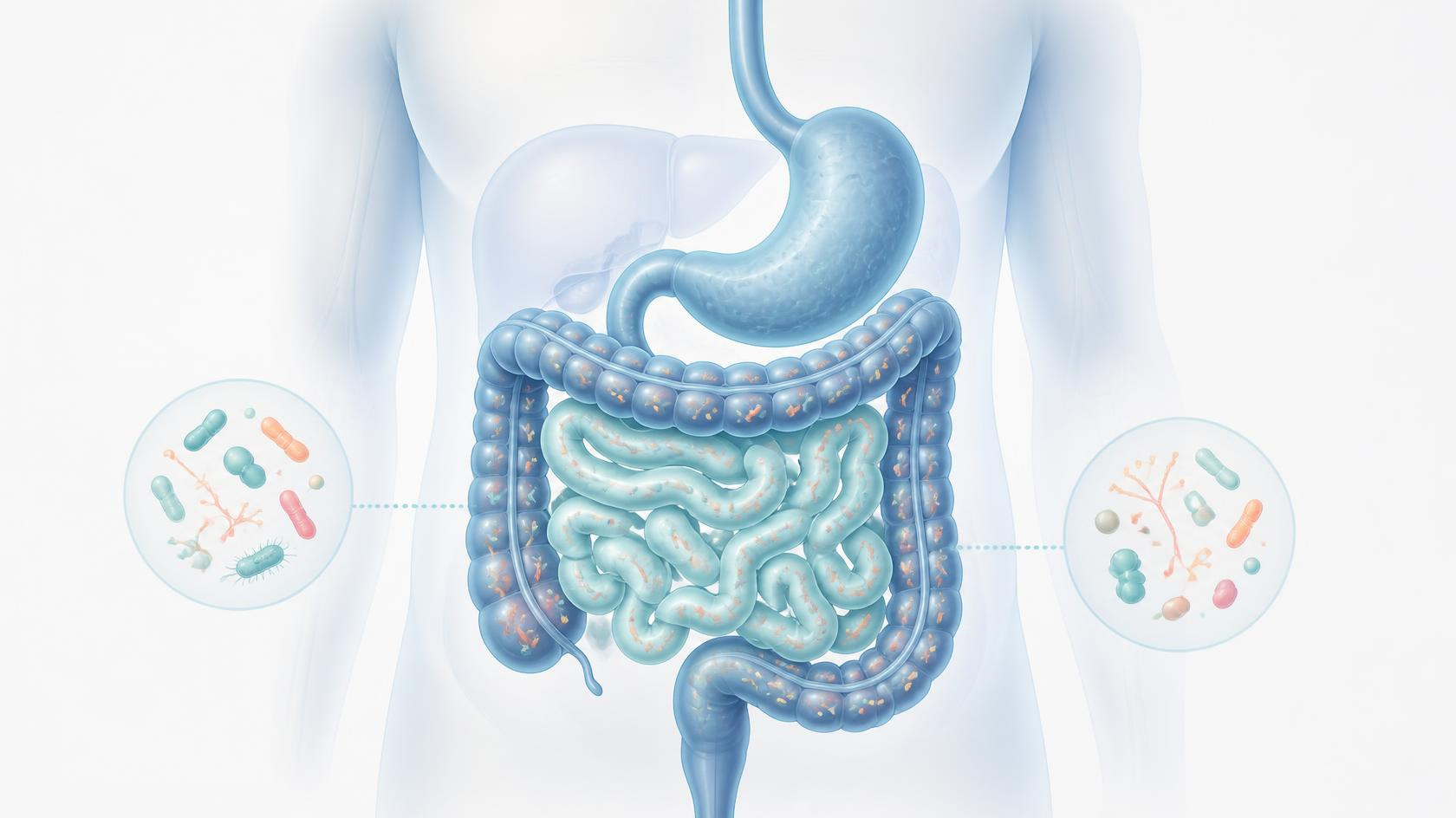
Your gut is not just about digestion, it is home to 70 percent of your immune system and directly influences your brain, hormones, and skin.
Chronic gut symptoms are not normal
Bloating, cramping, and inconsistent bowels are common but they are not healthy. Each one is your body flagging that something needs attention.
Bloating that will not quit
Abdominal pain & cramping
Diarrhea, constipation, or both
Acid reflux & GERD
Gas & belching
Nausea, fullness after eating
Undigested food in stool
Fatigue or brain fog after meals

Ready to actually get to the bottom of it? Let's talk.
Book a free health analysisWhy is your gut off?
Prescriptions for acid blockers, laxatives, and anti-spasmodics manage symptoms but rarely ask what is causing them. NEOS looks upstream to identify the actual driver, and then treats it.
Dysbiosis
An imbalance in your gut microbiome. Too much of the wrong bacteria, not enough of the right ones. Drives bloating, inflammation, and food intolerances.
SIBO
Small intestinal bacterial overgrowth. Bacteria grow where they should not, causing bloating, gas, and IBS-type symptoms. Frequently missed by standard workups.
Chronic stress
The vagus nerve directly connects your brain to your gut. Sustained stress disrupts digestion, motility, and the gut lining itself.
Food triggers
Gluten, dairy, and specific food sensitivities can drive inflammation and symptoms. Standard care often skips identification of these triggers entirely.
Antibiotic damage
Past antibiotic courses (even years ago) can leave lasting effects on the microbiome. Restoration takes intentional work.
Infections & parasites
Chronic low-grade infections (H. pylori, parasites, yeast overgrowth) can drive persistent symptoms and are commonly overlooked without stool testing.
Gut care that actually gets to the bottom of it
Most patients come to NEOS after years of symptom management with no diagnosis, or a diagnosis of “IBS” that came with no plan. Here is what a real workup looks like.
Deep dive intake
A 60 minute initial consult that maps out your symptoms, history, and gut timeline.
- Full symptom pattern and history
- Medication, antibiotic, and travel history
- Diet, stress, and lifestyle context
Comprehensive workup
Baseline plus targeted specialty testing to identify the actual driver.
- Baseline: CBC, CMP, inflammatory markers, celiac panel, micronutrient testing
- GI-MAP stool test for microbiome, pathogens, and gut lining markers
- SIBO breath test when bacterial overgrowth is suspected
- Food sensitivity testing when clinically indicated
Personalized protocol
A targeted plan built around what testing actually shows, not a generic gut cleanse.
- Antimicrobial protocols for SIBO, pathogens, or parasites when indicated
- Gut restoration: probiotics, prebiotics, digestive enzymes, HCL, L-glutamine
- Advanced clinical protocols for gut lining repair when clinically indicated
- Dietary protocol: elimination, low-FODMAP, or AIP based on your case
Ongoing care & monitoring
Gut healing is not linear. We stay involved as your body responds.
- Re-testing after antimicrobial and gut restoration phases
- Direct message access to PA Pappas between visits
- Protocol adjustments as symptoms and labs evolve
- Prevention strategy to keep gains and stop recurrence
Education throughout
You will understand your gut, your protocol, and why we chose it.
- Understand what your tests actually mean
- Know what each supplement or medication is doing
- Learn how to spot triggers and respond early in the future
Every tool that gut healing actually needs
The right combination depends on what testing reveals and what your body is doing. NEOS uses the full toolkit.
Standard care often skips gut-specific testing entirely. We use targeted specialty labs so protocols are built on data, not guesses.
Probiotics, prebiotics, digestive enzymes, betaine HCL, L-glutamine, and gut healing nutrients matched to your specific microbiome and presentation.
Targeted clinical therapies to support intestinal lining repair, reduce inflammation, and accelerate gut healing. Used within a broader protocol when clinically indicated.
The right dietary approach depends on your triggers and presentation. Structured to give you clear answers without endless restriction.

Real testing, real answers, real gut healing. Start here.
Book your free consultFixing your gut fixes more than digestion
The gut is connected to nearly every system in your body. Fixing it often improves conditions that seem completely unrelated.
The majority of your immune system resides in your gut. Chronic gut dysfunction is strongly implicated in autoimmune disease and immune dysregulation.
Gut inflammation and dysbiosis are linked to anxiety, depression, and brain fog. The vagus nerve is a two-way highway between your gut and your brain.
Dysbiosis and gut permeability are drivers of eczema, acne, rosacea, and other chronic skin conditions. Skin issues often clear when the gut is addressed.
Your gut microbiome plays a key role in metabolizing estrogen and other hormones. Gut dysfunction can drive hormonal imbalance and vice versa.

Advanced testing when you need more answers
These specialty tests are the difference between guessing and knowing what is actually driving your gut symptoms.
The gold standard functional stool test. Evaluates microbiome balance, pathogens (H. pylori, parasites, yeast), digestive markers, inflammation, and gut lining integrity in a single panel.
Detects and characterizes bacterial overgrowth in the small intestine. Identifies whether the pattern is hydrogen dominant, methane dominant, or mixed, which changes treatment.
Identifies food triggers when elimination diet alone is not producing clear answers or when multiple sensitivities are suspected. One input among many, always interpreted alongside symptoms.
Your gut is asking for a proper workup. Give it one.
Book your health analysisFunctional gut care that knows its lane
NEOS provides comprehensive functional medicine support for functional gut conditions like IBS, SIBO, dysbiosis, and gut lining repair. For inflammatory bowel disease (Crohn's and Ulcerative Colitis) and confirmed celiac disease, NEOS works alongside your GI specialist, providing the functional workup, gut restoration, and lifestyle support that complements conventional care.
All protocols are personalized based on comprehensive testing and evidence based clinical practice.
What patients ask before starting
What is the difference between IBS and IBD?+
IBS (Irritable Bowel Syndrome) is a functional disorder: symptoms are real and disruptive, but standard imaging and scopes usually appear normal. It is commonly driven by dysbiosis, SIBO, food triggers, or stress. IBD (Inflammatory Bowel Disease) includes Crohn's disease and Ulcerative Colitis, and involves visible inflammation and structural changes to the intestinal lining. IBD is autoimmune and requires ongoing GI specialist care. NEOS provides functional medicine support for both, working alongside your GI specialist when needed.
Can gut issues really be treated at the root cause?+
Yes, for most functional gut conditions. Standard care often focuses on symptom control (acid blockers, anti-spasmodics, laxatives) without asking why the symptoms are happening. Common root causes include dysbiosis, SIBO, pathogens (H. pylori, parasites), food triggers, chronic stress, antibiotic damage, and inflammatory diet patterns. Addressing these can produce lasting relief rather than ongoing symptom management.
What testing does NEOS run for gut issues?+
Baseline includes CBC, CMP, inflammatory markers, celiac panel, and micronutrient testing. Add-on specialty testing is available when clinically indicated: GI-MAP stool testing (comprehensive microbiome, pathogens, digestive markers, and intestinal permeability), SIBO breath testing (measures methane and hydrogen to detect bacterial overgrowth), and food sensitivity panels.
Do you treat SIBO?+
Yes. SIBO (small intestinal bacterial overgrowth) is a common cause of bloating, gas, and IBS-type symptoms. NEOS runs SIBO breath testing to confirm and identify the subtype (hydrogen, methane, or mixed), then uses targeted antimicrobial protocols followed by gut restoration to prevent recurrence. Because SIBO commonly recurs, we also identify and address the upstream factors that allowed it to develop.
Do you support patients with celiac disease?+
Yes. Celiac management requires strict lifelong gluten avoidance, but there is much more to full recovery than removing gluten. NEOS supports celiac patients with gut lining repair protocols, nutrient repletion for common deficiencies (iron, B12, vitamin D, zinc), microbiome restoration, and monitoring for related autoimmune conditions that frequently accompany celiac.
Does NEOS offer advanced gut healing protocols?+
Yes, when clinically indicated. Advanced clinical protocols can support intestinal lining repair, reduce gut inflammation, and accelerate healing after damage. These are used within a broader personalized protocol, not as a standalone fix, and prescribed based on your specific presentation.
How does gut health connect to other conditions?+
The gut affects nearly every system in the body. About 70 percent of your immune system lives in the gut, which is why gut dysfunction is strongly linked to autoimmune disease. The gut-brain axis connects gut inflammation to mood, anxiety, and brain fog. The gut-skin axis links dysbiosis to eczema, acne, and rosacea. And the gut plays a key role in hormone metabolism, especially estrogen. Fixing the gut often improves symptoms in seemingly unrelated systems.
Do you offer food sensitivity testing?+
Yes, as an add-on when clinically indicated. Food sensitivity testing can help identify triggers when elimination diet alone is not producing clear answers, or when multiple sensitivities are suspected. It is one input among many, not a standalone diagnosis. Interpretation always happens alongside your symptom picture.
Ready to actually address your gut?
Start with a free health analysis call. We will talk through your symptoms, your history, and whether NEOS is the right fit for your gut healing journey.
Book a free health analysis